

تسعير خدمات SMM للموزعين: كيف تحدد هامش الربح
 بقلم فريق SMM Target
قراءة 4 دقائق
الخلاصة
- ابدأ من تكلفتك الفعلية: سعر المورّد مع الرسوم وتحويل العملة والاسترداد والتعويض ووقت الدعم.
- اجمع بين هامش نسبي وحد أدنى للهامش لكل 1000 وأسعار يدوية للأكثر مبيعًا.
- قدّم مستويات واضحة لعملاء التجزئة والموزعين، وقرّب الأسعار، وضع حدًا أدنى معقولًا.
- نافس بالموثوقية لا بأقل رقم، وراجع الهوامش بانتظام.
محتويات المقال
لتسعير خدمات SMM بربح كموزع، ابدأ من تكلفة مورّدك لكل 1000، وأضف التكاليف الخفية — رسوم الدفع وتحويل العملة والاسترداد والتعويض ووقت الدعم — ثم طبّق هامشًا يعكس القيمة التي تضيفها، يكون عادة أعلى في الخدمات الرخيصة سريعة البيع وأقل في الخدمات الغالية. وقدّم مستوى سعر منفصلًا لموزعيك، وقرّب الأسعار ليفهمها العملاء، وراجعها كلما تغيرت أسعار المورّد أو سعر الصرف. فالمنافسة على أن تكون الأرخص فقط أسرع طريق للعمل الشاق دون ربح. يوضح هذا الدليل كيف تبني قائمة أسعارك خطوة بخطوة.
ابدأ من تكلفتك الحقيقية
لكل خدمة في اللوحة المورّدة سعر لكل 1000؛ فإن كانت الخدمة تكلف 0.50 دولار لكل 1000 وطلب العميل 5000، فتكلفتك 2.50 دولار. هذه نقطة البداية لا التكلفة الكاملة، فأضف:
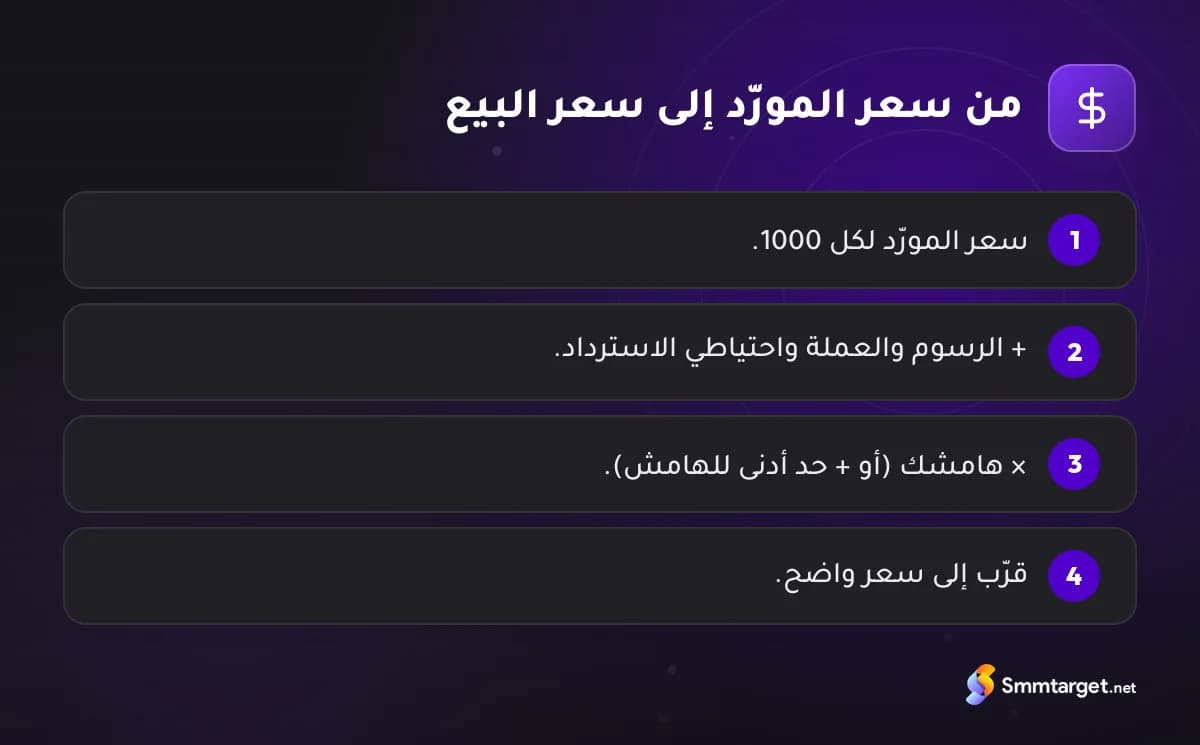
- رسوم الدفع: تأخذ معالجات البطاقات والمحافظ والتحويلات نسبة أو رسومًا ثابتة.
- تحويل العملة: إن كنت تبيع بالعملة المحلية وتدفع لمورّدك بالدولار، فسعر الصرف وهامش بنكك مهمان.
- الاسترداد والتعويض: بعض الطلبات تفشل جزئيًا أو تنقص، واسترداد المبالغ للعملاء والوقت الذي تقضيه في التعويضات يكلفان مالًا.
- وقت الدعم: الأسئلة والتأخيرات والنزاعات تأخذ ساعات يجب أن تُدفع لك.
- الأدوات: سكربت اللوحة أو الاستضافة والنطاق وأي إضافات مدفوعة.
والطريقة البسيطة لتغطية ذلك حساب «تكلفة فعلية» لكل خدمة: سعر المورّد × (1 + هامش احتياطي للتكاليف). ويستخدم موزعون كثيرون احتياطيًا بنسبة مئوية صغيرة للرسوم والإخفاقات، فقِس احتياطيك خلال شهر وعدّله.
اختر نموذج الهامش
الهامش النسبي: اضرب التكلفة الفعلية في معامل، مثل 1.5 أو 2. وهو سهل التطبيق على آلاف الخدمات ويتغير تلقائيًا مع تغير أسعار المورّد.
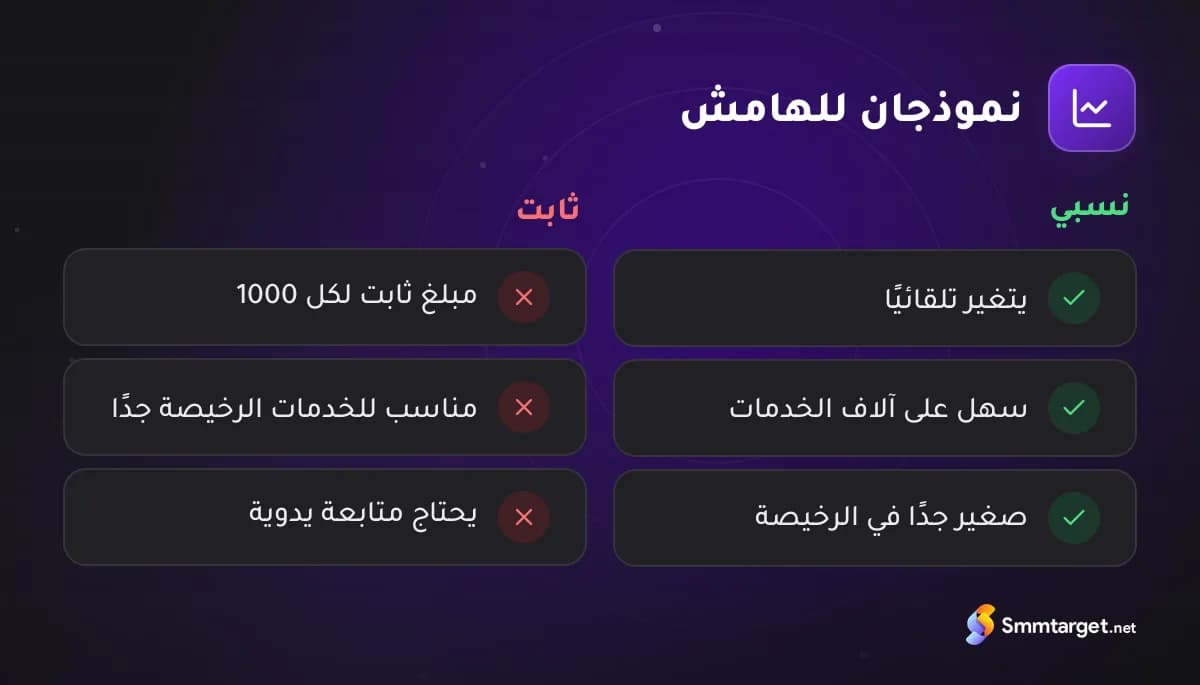
الهامش الثابت: أضف مبلغًا ثابتًا لكل 1000، وهو مفيد للخدمات الرخيصة جدًا التي ينتج فيها الهامش النسبي سعرًا صغيرًا لا يستحق وقت الدعم.
التسعير حسب القيمة: سعّر الخدمات عالية الطلب والجودة (المتابعون المستهدفون، وضمانات التعويض، والبدء السريع) أعلى من غيرها، لأن العملاء يقدّرون الموثوقية أكثر من بضعة سنتات.
وتجمع معظم اللوحات بين النماذج الثلاثة: نسبة افتراضية، وحد أدنى للهامش لكل 1000، وأسعار يدوية للخدمات الأكثر مبيعًا.
مثال محسوب
لنفترض أن خدمة مشاهدات تيك توك تكلفك 0.10 دولار لكل 1000، وخدمة متابعين انستقرام بضمان 30 يومًا تكلفك 1.20 دولار لكل 1000. مع احتياطي 5% تصبح التكلفة الفعلية 0.105 و1.26 دولار. وبمعامل 2 على المشاهدات يصبح السعر 0.21 دولار لكل 1000، وبمعامل 1.6 على المتابعين يصبح نحو 2.02 دولار، ويُقرّب إلى 1.99. فالمشاهدات تُباع بكميات كبيرة فيبقى المعامل الأعلى رخيصًا في نظر العميل، أما المتابعون فيحتاجون إلى عمل تعويض أكثر فتحتاج إلى هامش مطلق جيد. وهذه الأرقام توضيحية، فاستخدم أسعار مورّدك الفعلية.
غطِّ التعويض والاسترداد في السعر
الخدمات ذات ضمان التعويض ستحتاج أحيانًا إلى تعويضات تطلبها وتتابعها، والخدمات بلا تعويض قد تسبب شكاوى عند النقص. فسعّر خدمات الضمان بهامش يكفي لتغطية الوقت، واشرح بوضوح في الوصف معنى «بدون ضمان» ليختار العميل عن علم.
ضع مستويات لعملاء مختلفين
- عملاء التجزئة يطلبون كميات صغيرة ويحتاجون دعمًا أكثر، فيدفعون السعر القياسي.
- الموزعون والوكالات يطلبون بكميات كبيرة عبر الـAPI، فامنحهم مستوى أقل أو خصم كميات.
- العملاء الأوفياء يمكن منحهم خصومات صغيرة أو رصيدًا إضافيًا بعد حد إنفاق معين.
واجعل المستويات بسيطة حتى يبقى منطق تسعيرك قابلًا للإدارة. وتوضح صفحة لوحة SMM بالجملة كيف يعمل تسعير الكميات لدينا، وتشرح صفحة لوحة SMM للموزعين كيف يرتبط الموزعون بنا.
قرّب الأسعار وضع حدًا أدنى معقولًا
الأسعار مثل 0.2137 دولار لكل 1000 تربك العملاء، فقرّبها إلى أرقام واضحة (0.21 و1.99)، وضع حدًا أدنى للطلب حتى تغطي الطلبات الصغيرة رسومك. واعرض الأسعار لكل 1000 باتساق كما تفعل معظم اللوحات، واعرض الإجمالي قبل أن يؤكد العميل.
لا تدخل سباق الأسعار المنخفضة
تنافس بعض اللوحات على السعر فقط وتغيّر مورّديها باستمرار لتوفير أجزاء من السنت، والعملاء الذين يأتون من أجل أقل سعر يغادرون إلى التالي. نافس بالموثوقية بدلًا من ذلك: أوصاف دقيقة، ودعم سريع، وتعويضات حقيقية، وواجهة نظيفة، وخدمات تناسب سوقك، مثل الخدمات المستهدفة للجمهور العربي أو الخليجي إن كان هذا جمهورك.
راجع الأسعار بانتظام
تتغير أسعار المورّدين، وتُستبدل الخدمات، ويتحرك سعر الصرف. راجع هوامش أكثر خدماتك مبيعًا أسبوعيًا والباقي شهريًا. وتستطيع سكربتات لوحات كثيرة مزامنة أسعار المورّد عبر الـAPI وتطبيق هامشك تلقائيًا، ويشرح دليل المبتدئين لواجهة API للوحة SMM كيف يعمل الربط. وراقب الخدمات التي ارتفع سعرها لدى المورّد بينما بقي سعر بيعك كما هو، فهي تأكل ربحك بصمت.
تابع الربحية لكل خدمة
احتفظ بتقرير بسيط: لكل خدمة عدد الطلبات والإيراد وتكلفة المورّد والمرتجعات وتذاكر الدعم. فالخدمة الرخيصة كثيرة الشكاوى قد تخسر مالًا حين تحسب وقتك، والخدمة المستهدفة الغالية قليلة الشكاوى قد تكون أفضل منتجاتك، فعدّل الأسعار أو الأوصاف أو قائمة الخدمات وفقًا لذلك.
الخلاصة
يبدأ التسعير المربح لخدمات SMM من تكلفتك الفعلية الحقيقية، ويطبّق نموذج هامش يناسب كل نوع خدمة، ويغطي التعويض والاسترداد والرسوم، ويقدم مستويات واضحة لعملاء التجزئة والموزعين. قرّب الأسعار، وراجعها بانتظام، ونافس بالموثوقية لا بأقل رقم. وللصورة الكاملة عن البداية اقرأ كيف تبدأ مشروع إعادة بيع خدمات SMM.
الأسئلة الشائعة
ما الهامش الذي يستخدمه موزعو SMM؟
يختلف؛ يستخدم كثيرون معاملًا بين 1.5 و2 للخدمات الرخيصة ومعاملًا أقل مع حد أدنى جيد للهامش للخدمات الغالية.
هل أكون أرخص لوحة؟
لا؛ فالعملاء الذين يأتون من أجل السعر فقط يغادرون إلى الأرخص التالي، والموثوقية والدعم هما ما يبقيهم.
كيف أتعامل مع تغير أسعار المورّد؟
زامن الأسعار عبر الـAPI حيث يمكن، وراجع هوامش أكثر الخدمات مبيعًا أسبوعيًا.
هل تحتاج خدمات الضمان إلى سعر أعلى؟
غالبًا نعم، لأن التعويضات تحتاج وقتًا لطلبها ومتابعتها.
كيف نُعد أدلتنا ونحدّثها وكيف نميّز خدماتنا: سياسة التحرير
خدمات مرشحة لهذا المقال
خدمات حقيقية من لوحة SMM Target مع سعرها لكل 1000. قد تتغير الأسعار، وتعرض اللوحة دائمًا السعر الحالي.
- رقم الخدمة 16407متابعين إنستغرام | حسابات حقيقية | 10 الف/يوم | بدون إعادة تعبئة | فوري$0.3469لكل 1000
- رقم الخدمة 9325إعجابات إنستغرام تلقائية | تصل الى 10-25 الف/باليوم | بدون ضمان | 0-1 ساعة$0.0565لكل 1000
- رقم الخدمة 10007مشاهدات تيك توك | الاسرع | زر الإلغاء | فوري | بدون إعادة تعبئة$0.0041لكل 1000
- رقم الخدمة 10320مشاهدات يوتيوب | بدون إعادة تعبئة | الأرخص | بدون ضمان | 0-24 ساعة$0.182لكل 1000
- رقم الخدمة 17344متابعين صفحة / حساب فيسبوك | 20 آلاف/يوم | صفحات | بدون اعادة تعبئة | 0-6 ساعات$0.1209لكل 1000
- رقم الخدمة 9865أعضاء تليجرام | إعادة تعبئة تلقائية | الأرخص | فوري ♻$0.442لكل 1000
- #reseller
- #pricing
- #smm-panel
- #business
ابدأ مجانًا
إنشاء حساب