
Social Media Marketing in the Maghreb: A Practical Guide

4 min read
Key takeaways
- In Morocco, Algeria, Tunisia and Libya, Facebook is the marketplace, TikTok drives reach and Instagram builds brand image.
- Write in Darja mixed with French as customers do; formal Arabic suits official notices only.
- Show prices, delivery areas and cash-on-delivery terms clearly to win trust.
- The Maghreb is one to three hours behind the Gulf: schedule in local time.
In this article
Marketing on social media in the Maghreb — Morocco, Algeria, Tunisia and Libya — means working with a Facebook-first culture where TikTok and Instagram are growing fast, writing in Darja mixed with French rather than formal Arabic, making cash-on-delivery and delivery areas clear, and posting for UTC+1 and UTC+2 time zones that differ from the Gulf. Each country has its own habits within that pattern. This guide explains what the four markets share, where they differ and how to adapt content that was made for the Gulf or Egypt.
What the Maghreb markets share
Facebook is the marketplace. In all four countries, Facebook pages and groups remain central for news, football, classifieds and online shops. Many small businesses sell entirely through a Facebook page and Messenger.
TikTok is the growth engine. Short videos reach younger audiences quickly, and many shops use TikTok to demonstrate products and send viewers to Facebook or WhatsApp to order.
Instagram is the brand stage. Fashion, beauty, cafés, tourism and creators build their image on Instagram, especially in big cities.
Language is mixed. Everyday online language is Darja — Moroccan, Algerian, Tunisian or Libyan Arabic — often mixed with French and written in Arabic script or Latin letters. Modern Standard Arabic sounds formal; it suits official announcements, not product demos.
Country by country
Morocco. Facebook, Instagram and TikTok are all widely used, and YouTube is popular for longer content. Moroccan Darja with French works for most brands; Amazigh (Tamazight) content connects in regions where it is spoken. Tourism, fashion, food and crafts perform well visually. Our SMM panel Morocco page covers the platform mix.
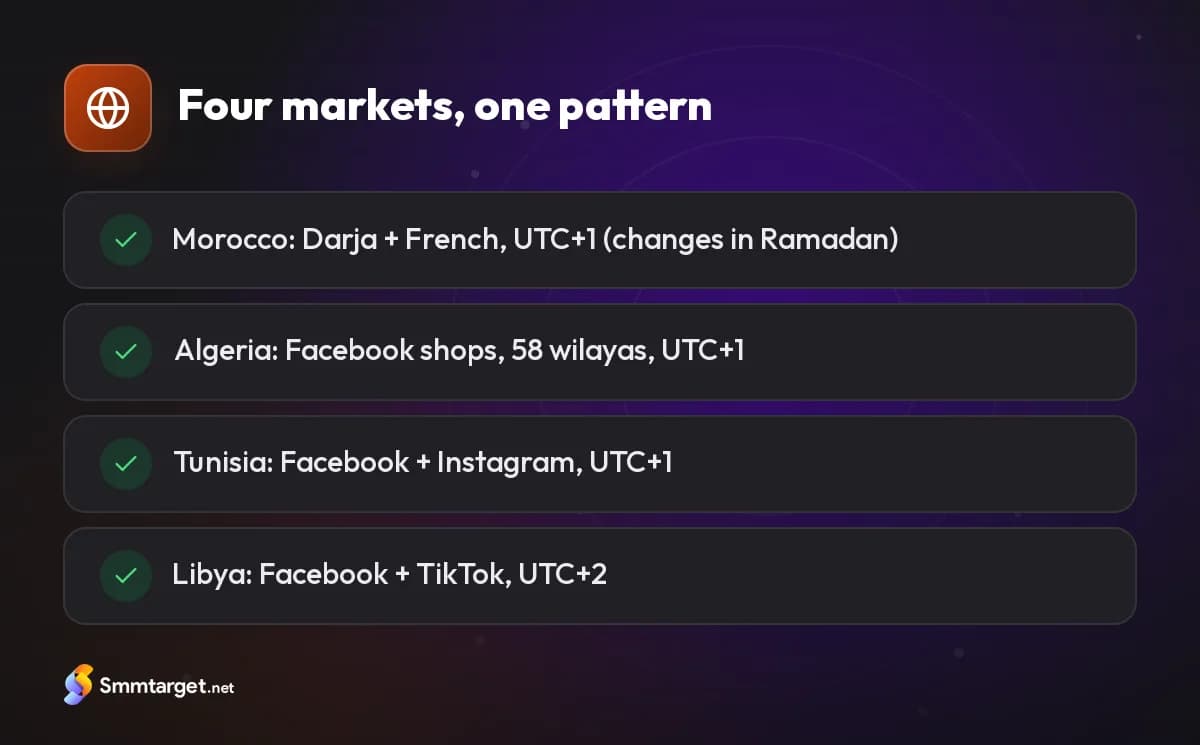
Algeria. Facebook is dominant and e-commerce often runs on Facebook pages with delivery to the 58 wilayas and payment on delivery. TikTok is strong for humour and demos. Content in Algerian Darja with French, and Tamazight in Kabylie and other regions, feels natural. See the SMM panel Algeria page for Algerian-targeted services.
Tunisia. Facebook is the everyday platform for news, debate and selling; Instagram is the stage for fashion, crafts and tourism. Tunisian Darja with French is the common register, and many brands also sell to Tunisians in Europe. Our SMM panel Tunisia page lists Tunisian-targeted services.
Libya. Facebook is the backbone for news, cars, property and shops selling through Messenger, while TikTok is very popular with young Libyans. Libyan dialect and clear delivery details between cities matter most.
Time zones and timing
Morocco uses UTC+1 for most of the year and moves its clocks back by one hour during Ramadan. Algeria and Tunisia use UTC+1 all year, and Libya uses UTC+2. That means the Maghreb is one to three hours behind the Gulf: a campaign scheduled for “9 pm Riyadh time” reaches Casablanca, Algiers and Tunis in the late afternoon or early evening. Evenings after dinner are usually busiest; during Ramadan, the hours after iftar and late at night are strongest. Check your own insights, then schedule in local time.
Cash on delivery and trust
Many Maghreb shoppers prefer to pay on delivery, and that shapes social media selling:
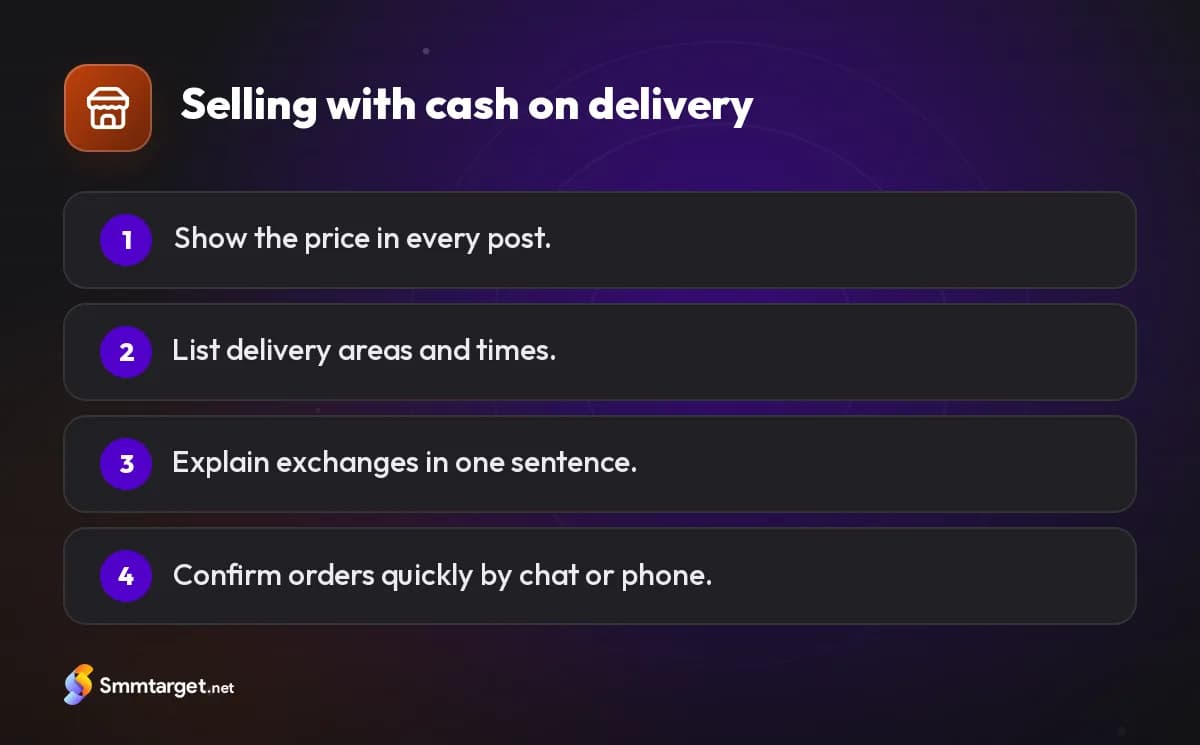
- State the price clearly. Posts that hide prices fill the inbox with questions and lose buyers.
- Show delivery areas and times for each city or region.
- Explain exchanges and returns in one simple sentence.
- Show real products and real customers — video demos and unboxings reduce the fear of receiving something different.
- Answer messages fast; many orders are confirmed by phone or chat before shipping.
Content that works in the Maghreb
- Product demos in Darja, filmed on a phone, with the price on screen.
- Football moments — national teams and local clubs drive huge engagement, but be careful with rivalries.
- Humour and everyday situations that people recognise from their city.
- Seasonal content for Ramadan, Eid, summer weddings and back-to-school.
- Facebook Reels repurposed from TikTok without watermarks. Our guide to getting more Facebook Reels views explains how.
Adapting Gulf or Egyptian content
Content made for the Gulf or Egypt often needs more than translation: replace dialect words, show local prices in dirhams or dinars, use local faces and places, and adjust the posting time. A Saudi-style caption can feel foreign in Algiers, just as Egyptian slang may not land in Casablanca. Even between Maghreb countries, words and humour differ, so a Tunisian video may need new captions before it works in Morocco.
Growing a Maghreb Facebook page
Because Facebook is so central, a strong page is the foundation: complete details, a clear call to action, steady Reels and product posts, helpful participation in local groups and fast replies. Our guide on how to grow a Facebook business page walks through each step.
Where paid services fit
Some Maghreb pages use SMM services to support new pages or launch videos, and the panel lists Algerian, Tunisian, Moroccan and Libyan-targeted services such as Instagram, TikTok and Facebook Reels views. Platforms prohibit fake engagement and paid views do not buy anything, so keep these small, use country-targeted options for coherence and invest mainly in content and fast service.
Conclusion
The Maghreb rewards brands that speak like their customers: Darja with French, Facebook as the marketplace, TikTok for reach, Instagram for image, clear prices and cash-on-delivery details, and posting in local time. Adapt content for each of the four countries rather than copying Gulf or Egyptian campaigns, and your social media will feel local — which is what makes people buy.
Frequently asked questions
Which platform is biggest in the Maghreb?
Facebook remains central in all four countries, with TikTok growing fast and Instagram strong for fashion, beauty and tourism.
Should I write in Arabic or French?
Usually in Darja mixed with French, as customers write. Use formal Arabic for official messages.
Why does cash on delivery matter?
Many shoppers prefer to pay on delivery, so clear prices, delivery areas and return terms reduce hesitation.
Can I reuse Gulf or Egyptian content?
Adapt it: change dialect words, prices, faces, places and posting times for each Maghreb country.
How we research and update our guides, and how we label our own services: editorial policy
Recommended services for this article
Real services from the SMM Target panel with their rate per 1,000. Rates can change; the panel always shows the current price.
- Service ID 10470مشاهدات فيديو فيسبوك | 100% تونسي | +1-5 ألف/يوم | بدون نقص | بدون ضمان$0.3393per 1000
- Service ID 10471مشاهدات فيديو فيسبوك | 100% جزائري | +1-5 ألف/يوم | بدون نقص | بدون ضمان$0.3393per 1000
- Service ID 10566مشاهدات تيك توك | تونس | بدون ضمان | 0-48 ساعة$0.1872per 1000
- Service ID 10567مشاهدات تيك توك | الجزائر | بدون ضمان | 0-48 ساعة$0.1872per 1000
- Service ID 10460مشاهدات إنستغرام | 100% مغربي | 10 ألف/يوم | جميع الروابط$0.1393per 1000
- Service ID 10461مشاهدات إنستغرام | 100% ليبي | 10 ألف/يوم | جميع الروابط$0.1393per 1000
- #maghreb
- #business
- #strategy
Get Started Free
Sign Up